
As a world leader in ingredient solutions for healthier and tastier food and drink, Tate & Lyle is intrinsically linked to agriculture and working toward responsibly meeting the increased demands for future food production. Addressing the challenges of feeding a growing population requires a supply chain that is more resilient to the impacts of climate change, built on the foundation of regenerative farming practices which improve and restore nature’s ecosystems.
Over 25% of Tate & Lyle’s greenhouse gas emissions come from agriculture. Our regenerative agriculture programmes focus on the agricultural raw materials where we have the biggest opportunity to make a positive impact: corn and stevia.
Learn more about our efforts in sustainable agriculture

Making progress
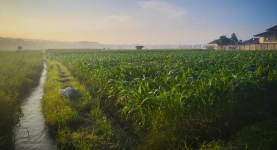
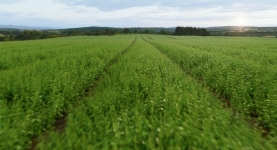
Now in its third full year, the programme continues to focus on optimising the use of fertiliser, due to its significant environmental impact, particularly on GHG emissions and watershed quality. The 2023 stevia growing season marked the first year in which all participating farmers used organic fertiliser in place of urea and, on average, this meant they used 74% less fertiliser overall. This had a very positive environmental impact, as can be seen from the figures below, with our 2023 updated lifecycle analysis showing significant reductions in GHG emissions, soil acidity and ecotoxicity. The programme, with its focus on regenerative agriculture farming practices, is helping to build a more resilient supply chain by mitigating the potential impacts of increasing seasonal variability in weather in China. It’s been really positive to see the cultural shift among the local farming community in recognising its benefits.
Participating farmers have been helped to achieve1:
• a 74% reduction in fertiliser use.
• a 90% decrease in terrestrial acidification, which shows significantly improved soil health and biodiversity, and improved availability of nutrients to the stevia plant.
• a 76% decrease in terrestrial ecotoxicity, which measures the impact that farming inputs, such as fertiliser, have on land-dependent organisms and their environment.
• a 56% reduction in greenhouse gas emissions.
1 Per pound of stevia rebaudioside A produced, compared to a 2019 baseline
In its second full year, the programme in Dongtai, which focused on soil sampling and soil health, saw more farmers taking part. The programme includes a voluntary agreement to sign up to Tate & Lyle’s Stevia Supplier Sustainability Commitment, a pledge to reduce the environmental impact of stevia farming. Growers are helped to understand better their environmental impact through sampling, assessments and participation in workshops, with a clear goal of reducing their environmental impact and improving productivity and profitability. The impact of the expanded programme has been very encouraging with double-digit reductions in every category measured in the life cycle analysis, most notably1:
• A 55% reduction in GHG emissions.
• A reduction in terrestrial and freshwater exotoxicity by 52% and 47%, respectively. Exotoxicity metrics measure the impact that farming inputs, such as fertiliser, have on land and freshwater dependent organisms and their environment.
• A 50% reduction in freshwater eutrophication, a process in which a body of water becomes overly enriched with nutrients, therefore decreasing local watershed quality and biodiversity.
1 Per pound of stevia rebaudioside A produced, compared to a 2019 baseline
The pilot focused on fertiliser optimisation, specifically replacing synthetic fertiliser with slow release alternatives with support provided to guide farmers on the type, application timing, targeting and volume of fertiliser used.
In its first full year, the Dontai pilot programme saw promising reductions in environmental impacts while indicating direct economic benefits for farmers. Reductions were found in all of the environmental impact categories measured against the baseline, the most significant including:
- 16% reduction in eutrophication1 , a process in which a body of water becomes overly enriched with nutrients, therefore decreasing local watershed quality.
- 13% reduction in acidification potential, the measure of the potential increase in acidity of an ecosystem, which is linked to reduced soil health, water quality, biodiversity and lower crop yield.1
- 7% reduction in greenhouse gas emissions.1,2
The pilot found that slow-release fertilisers present farmers with the opportunity to reduce the number of applications and total volume of fertiliser used by 60-80%, while positively influencing stevia productivity and steviol glycoside content, resulting in a greater proportion of the desirable sweet components used to make stevia ingredients, providing an economic benefit to farmers.
Sharing the results and lessons learned with local growers regardless of their participation in the programme increases awareness, provides opportunity to participate in the future and strengthens the local farming community.
1 Per pound of stevia rebaudioside A produced.
2 Emissions from farming in Dongtai.
Our regenerative agriculture programs are aligned with our purpose by prioritizing environmental stewardship through embracing regenerative farming practices while improving the livelihoods of participating farmers. Partnering with our suppliers, customer and stakeholders has enabled the programs to scale over time.
Our approach includes:
• Educating farmers on regenerative farming practices and working with them to implement changes to their current practices with support from local agronomists.
• Supporting farmers to continue and adopt practices that improve soil health, increase biodiversity and improve local ecosystems.
• Restoring soil health to reduce emissions, increase carbon sequestration, enhance ecosystem services, and build resilient, productive farming systems.
• Improving the livelihoods of farmers through greater economic prosperity.